
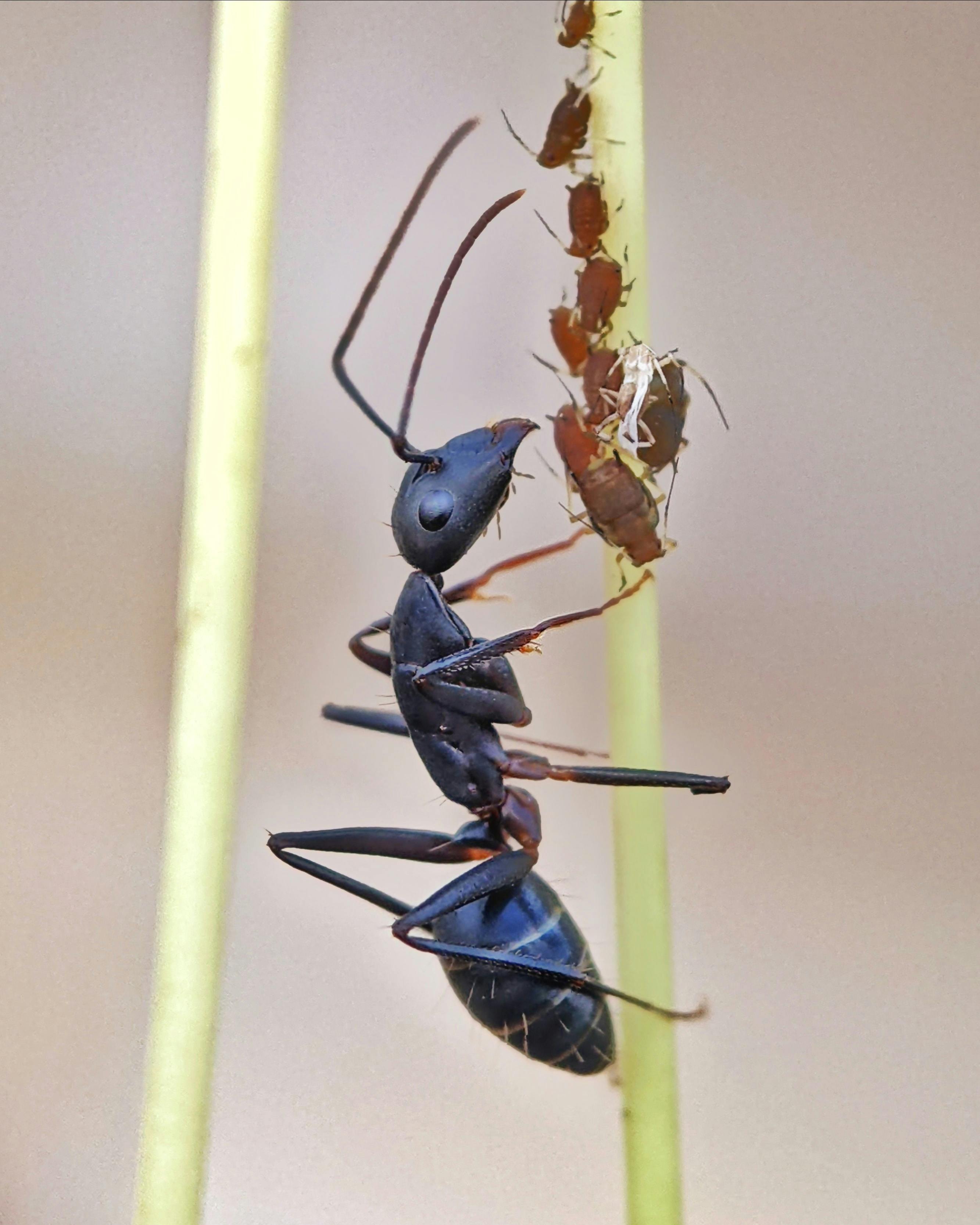
Dr. Mélanie Bey

Social evolution has sparked my interest throughout my academic career. Sociality represents a powerful and evolutionarily stable strategy that has independently emerged across diverse animal taxa, from mammals to countless insect species. Over the past 100 million years, eusociality has allowed a vast number of insect species to thrive. I began my academic journey by exploring the remarkable phenomenon of eusociality in insects, which represents the ultimate step in social evolution. Using ants as a model, I aimed to unravel the proximal mechanisms of social behaviour and understand how neuro-sensory systems have evolved to sustain such complex social structures in nature. My research has led me to investigate various forms of learning, including memory formation and habituation mechanisms. I have also explored chemical communication, the foundation of social interactions, and the role of olfactory and sensory circuits in insect group recognition and maintenance. During my PhD, I employed behavioral experiments, transcriptomic analyses, and chemical analyses to study the proximal mechanisms underlying the flexibility of the nestmate and non-nestmate olfactory identity recognition in ants. My long-term goal is to further develop my research on neuroevolution in the context of sociality. I aim to uncover common neural pathways that support social behaviors through an evolutionary-comparative approach. As part of my effort to study the cognitive and neurobiological foundations of the 'social brain', I intend to use techniques such as optogenetics, electrophysiology, in vivo imaging, single-cell analysis, RNA sequencing, and other molecular tools to explore cognition and neuro-sensory adaptation in social contexts. I plan to use eusocial insect models, as well as Drosophila melanogaster—with its extensive genetic toolkit, well-characterized molecular pathways, and fully mapped brain connectome—to address these questions. I also believe that the octo-dopaminergic system plays a critical role in understanding social behavior. Investigating how the brain’s reward circuits are activated during activities that do not directly enhance survival, feeding behaviour or reproduction, such as play or the intriguing phenomenon of Autonomous Sensory Meridian Response (ASMR), offers a unique window into the mechanisms that contribute to social functioning.

see my Orcid page

Ants hold a grudge

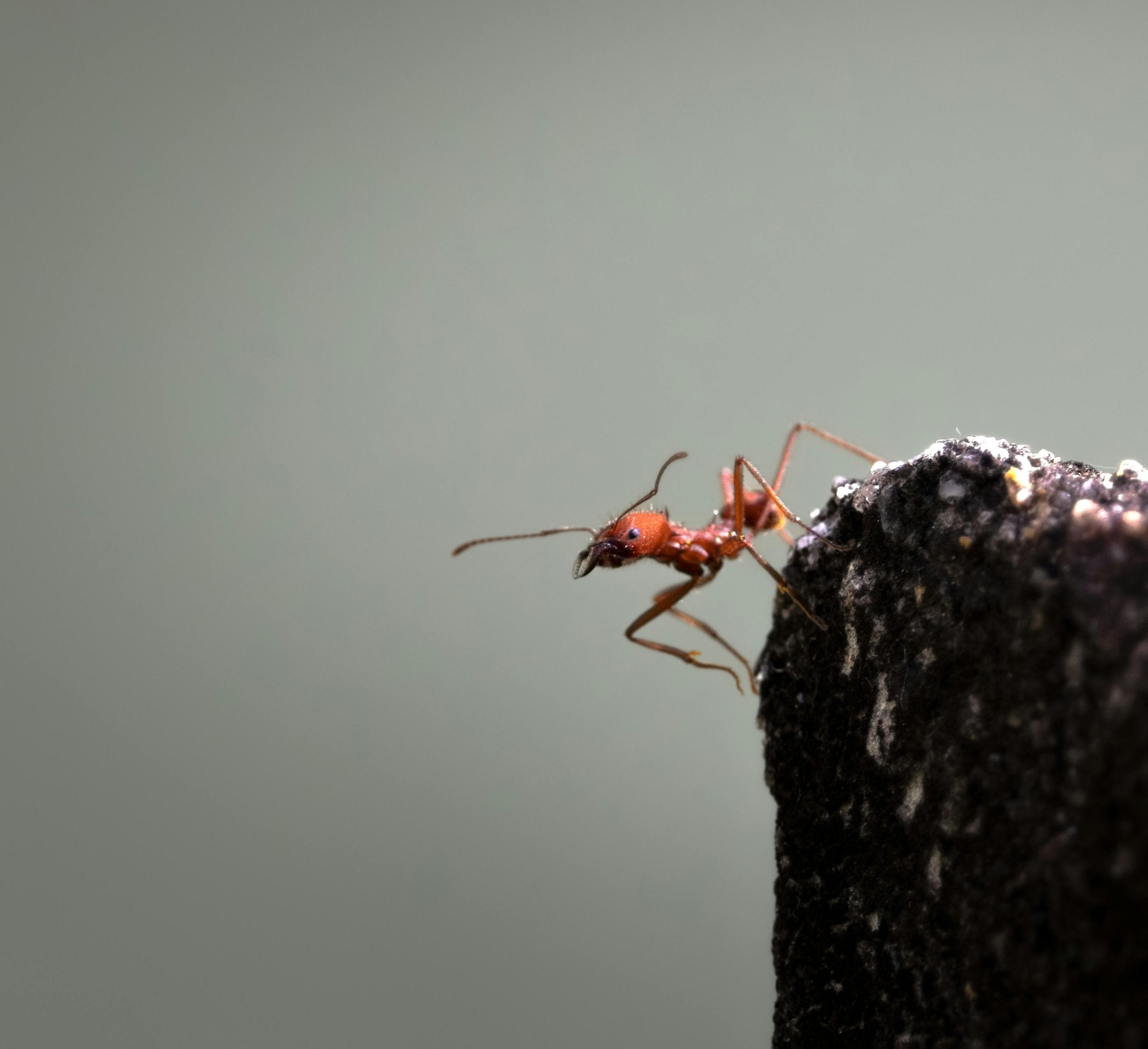
Ants are aggressive little being, especially towards neighbouring colonies, a phenomenon known as the 'nasty neighbour effect.' Our study demonstrates that ants retain memories of colonies that have previously attacked them, resulting in increased aggression during subsequent encounters. This suggests that associative learning of colony olfatory identities plays a crucial role in the development of social recognition templates in ants.

Bey, M., Endermann, R., Raudies, C., Steinle, J., Nehring, V. (2025): Associative learning of non- nestmate cues improves enemy recognition in ants. Curr. Biol. 35: 407-.
get to the article...

Scents of identity

Ants rely on their olfaction to recognise their nestmates and maintain the colony cohesion. Using behavioural, transcriptomic, and chemical analyses to assess the formation of their most crucial social memory: olfactory identity. We show that the flexibility of this memory requires both peripheral (antenna) and central (brain) modulation of the nervous system. Habituation shifts olfactory receptor distribution, while associative learning shapes the neural template in higher brain regions.

Bey, M., Alex, N., Maczkowicz, L., Nehring, V. (2025): Exposure to non-nestmate odours changes the odorant receptor profile in Acromyrmex echinatior ants. bioRxiv 2025.08.17.668880.

get to the article...

Other Publications

Published open access

Students

Sanya Laas

(BSc 2023, Uni Freiburg, Germany): Template formation in ants.

Lisa Maczkowicz

(BSc 2023, HU Berlin, Germany): Pheromone habituation in ants.

Viesturs Leibold

(MSc 2022, Uni Freiburg, Germany): Formation of nestmate recognition templates in ants.

Jonas Steinle

(BSc 2021, Uni Freiburg, Germany): Behavioural variation in ants.

Naomi Alex

(BSc 2021, Uni Freiburg, Germany): Olfactory habituation.

Who's next?

Write me if you are interested in a collaboration :)

Get in touch